WordPress engineering for ambitious agenciesLooking for a delivery partner?

CASE STUDY

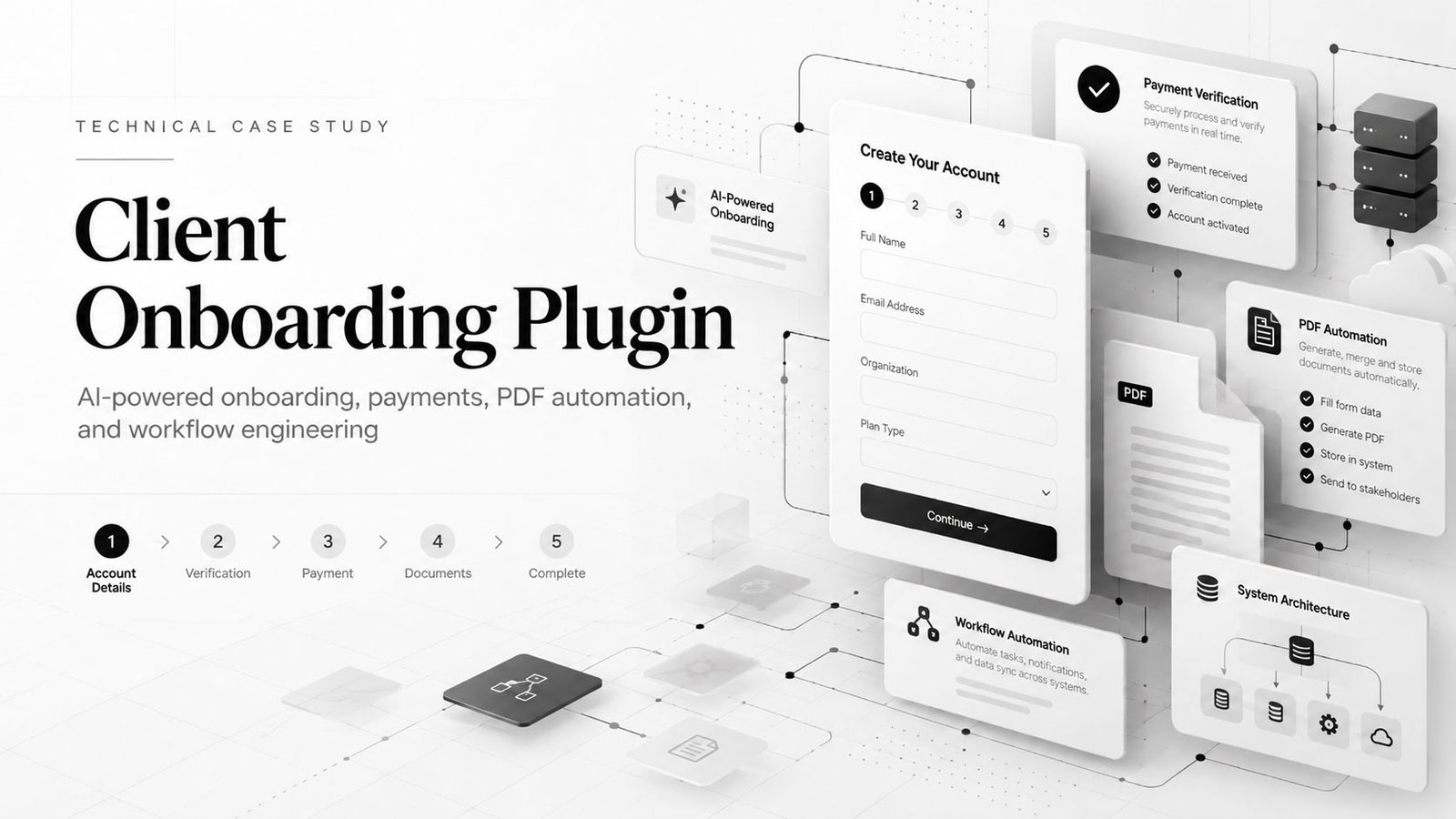
Client Onboarding Plugin

A custom WordPress onboarding system engineered around dynamic multi-step applications, AI document extraction, server-trusted billing, PDF contract automation, DATEV delivery, recovery workflows, and data-lifecycle controls.

← All case studies
WordPress Engineering / Project Case Study

Client Onboarding Plugin

A custom WordPress onboarding system engineered around dynamic multi-step applications, AI document extraction, server-trusted billing, PDF contract automation, DATEV delivery, recovery workflows, and data-lifecycle controls.

  • 38 engineering features
  • 6 technical systems
  • 12 screenshot locations
Project context
Business Problem

The client needed more than a form. They needed a complete onboarding workflow that could adapt by membership type, accept payments, generate contracts, and continue downstream into finance and compliance operations.

Engineering Challenge

Most of the difficulty lived in orchestration: dynamic schema handling, server-trusted billing, PDF field compatibility, state recovery, and robust error-handling across external systems.

Implementation Outcome

The final plugin behaves like a vertical SaaS workflow inside WordPress, replacing multiple disconnected tools with one controlled onboarding and contract pipeline.

System 01

Custom Form Architecture & Onboarding Engine

The onboarding layer is not a static form. It is a schema-driven system capable of changing the user journey, field behavior, and membership context dynamically.

Engineering context

Agency owners usually see only the front-end form. The actual engineering value is underneath: a configurable form engine, a routing layer that determines which onboarding flow to launch, and client-side state behavior designed to preserve progress.

01

Schema-driven multistep form builder

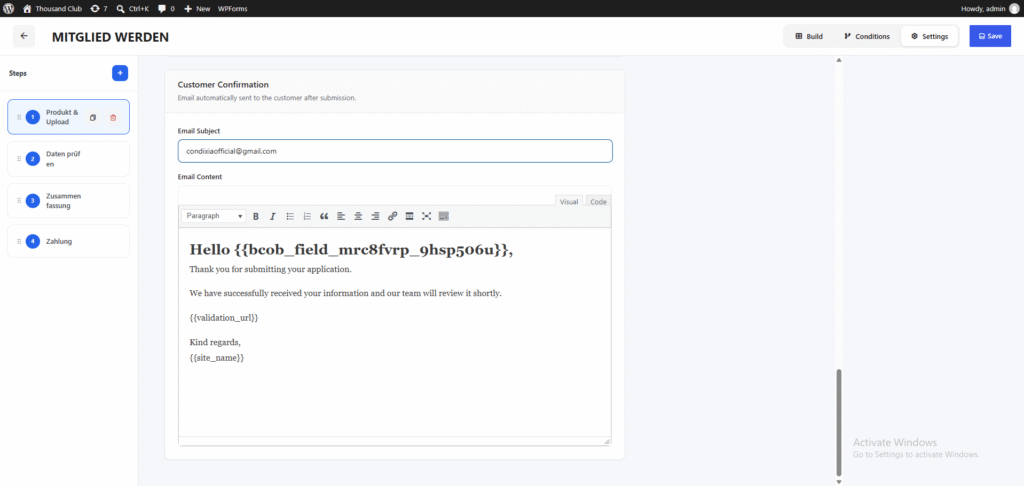
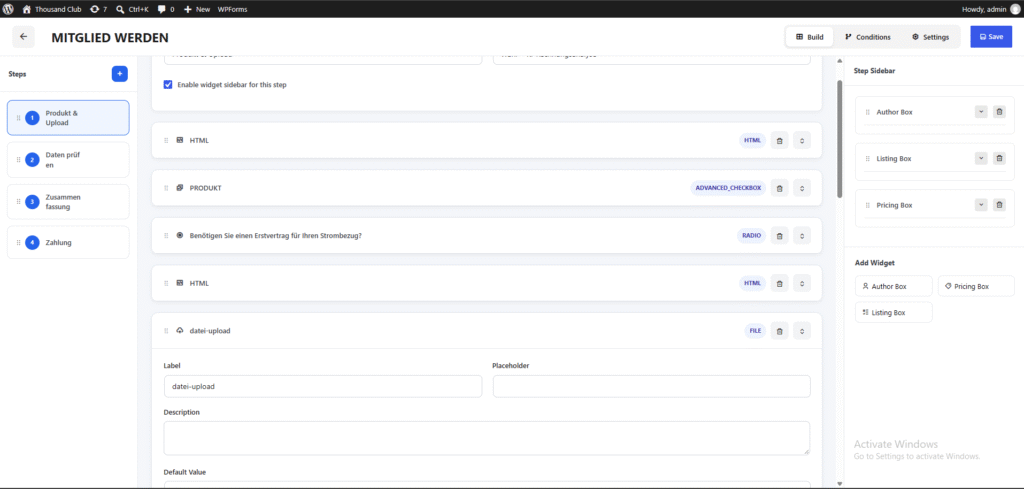
The plugin uses custom form schemas with configurable steps, fields, settings, drag-and-drop ordering, and duplication support. This means new onboarding flows can be assembled and maintained without hardcoding every field into templates.

Engineering depth: The value is in the form-schema model and field-registration architecture, which makes the builder extensible rather than brittle.

02

Advanced conditional logic engine

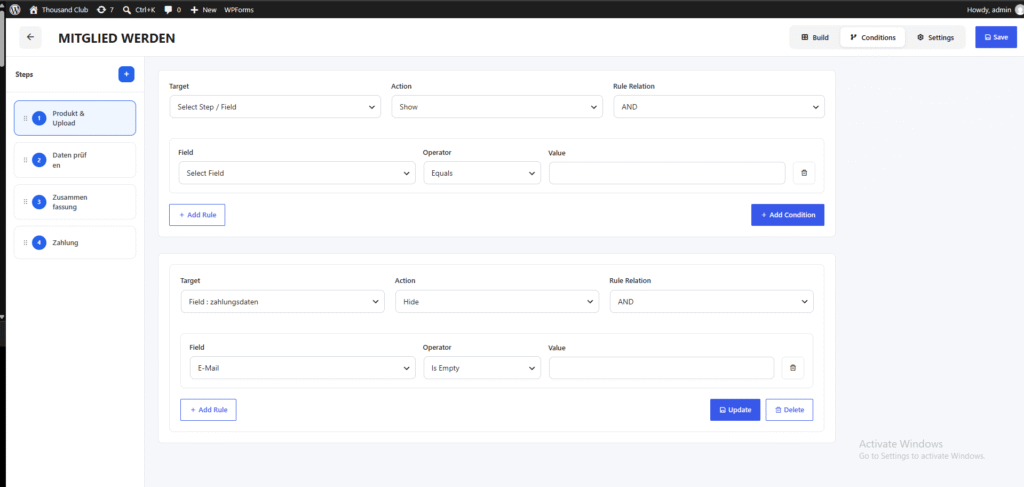
Fields and steps can be shown or hidden through compound AND/OR logic and comparison operators. Hidden inputs are also disabled so irrelevant data is not submitted accidentally.

Engineering depth: This is more than UI toggling — it couples conditional evaluation with valid submission behavior.

03

Dynamic membership-to-form routing

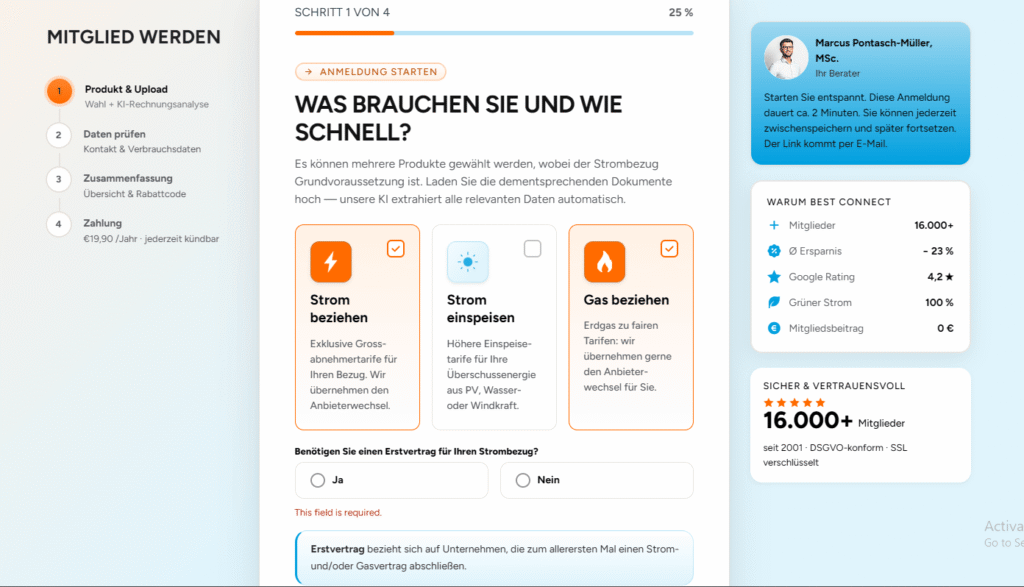
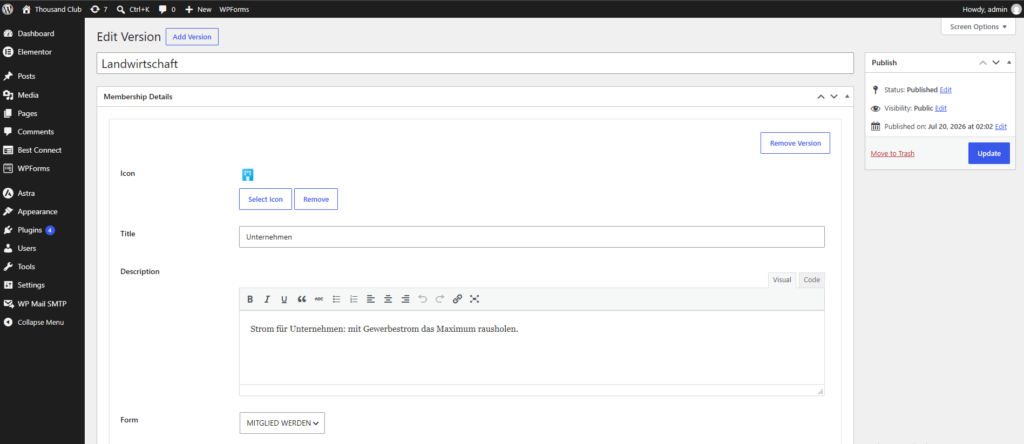
Different membership packages and versions can launch different onboarding forms from a unified portal, allowing the same plugin to serve multiple productized onboarding journeys.

Engineering depth: Product structure and form logic are decoupled but still linked at runtime.

04

AJAX-powered onboarding overlay

The onboarding flow loads dynamically in an overlay, with nonce renewal, lifecycle handling, focus management, and browser-history integration so the application feels cohesive instead of page-fragmented.

Engineering depth: The flow behaves like an application state machine inside WordPress.

05

Persistent multistep form state

The plugin stores progress in browser session storage and restores values later, including special handling for checkboxes and radio groups.

Engineering depth: Restoring state across complex input types is often where onboarding flows break. This system handles that explicitly.

Implementation screenshots

System 02

AI-Powered Document Processing

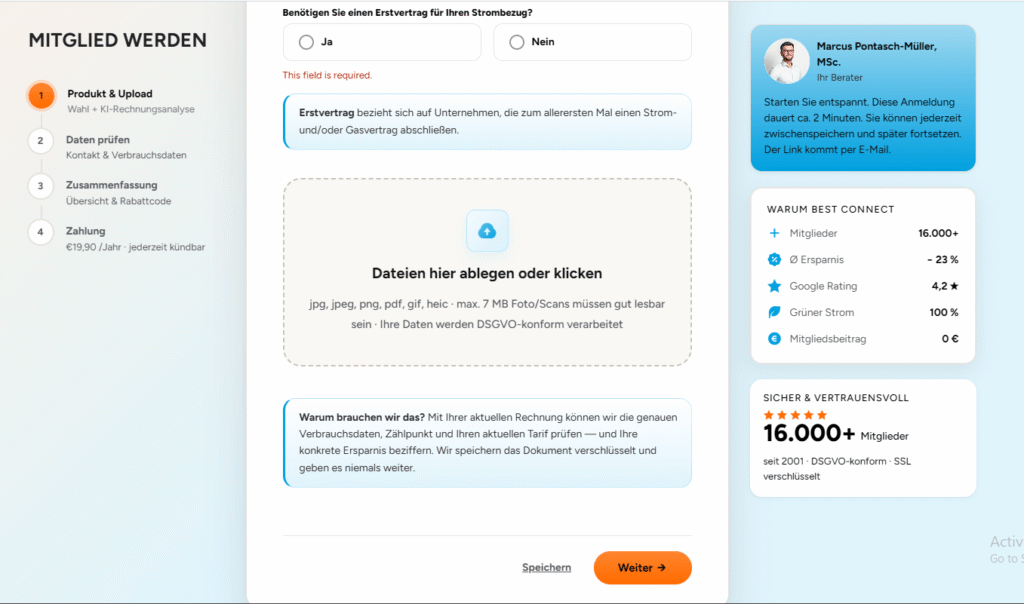
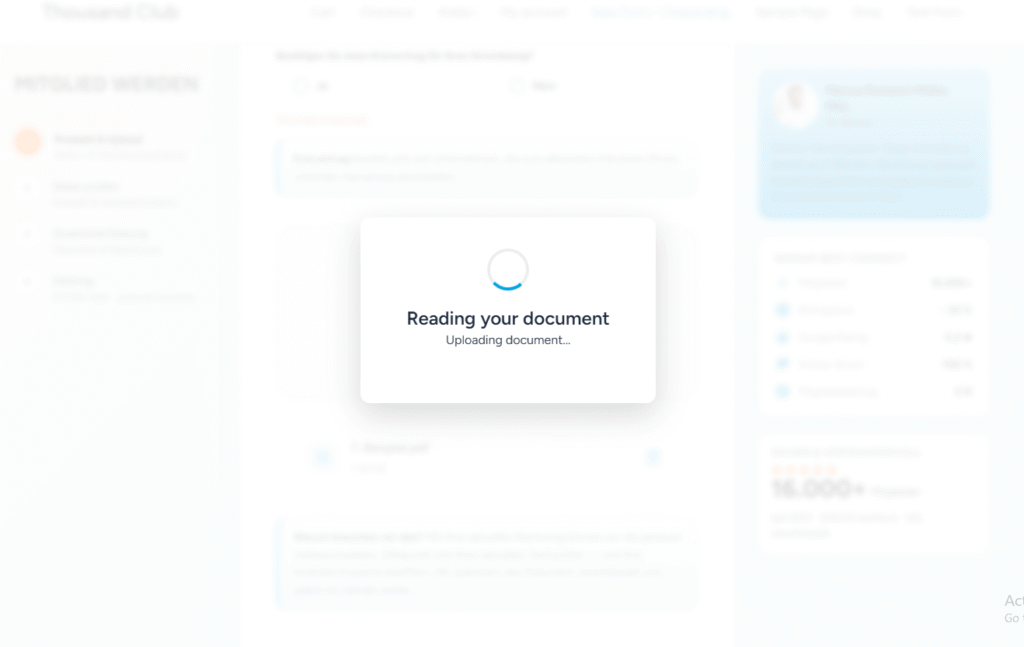
One of the strongest differentiators in the plugin is the document ingestion flow: users can upload files, and the system attempts to convert those documents into structured onboarding data.

Engineering context

This reduces manual data entry and increases completion speed, but the important part is that the AI logic is aware of the destination schema and not just running blind OCR.

06

AI document-to-form autofill

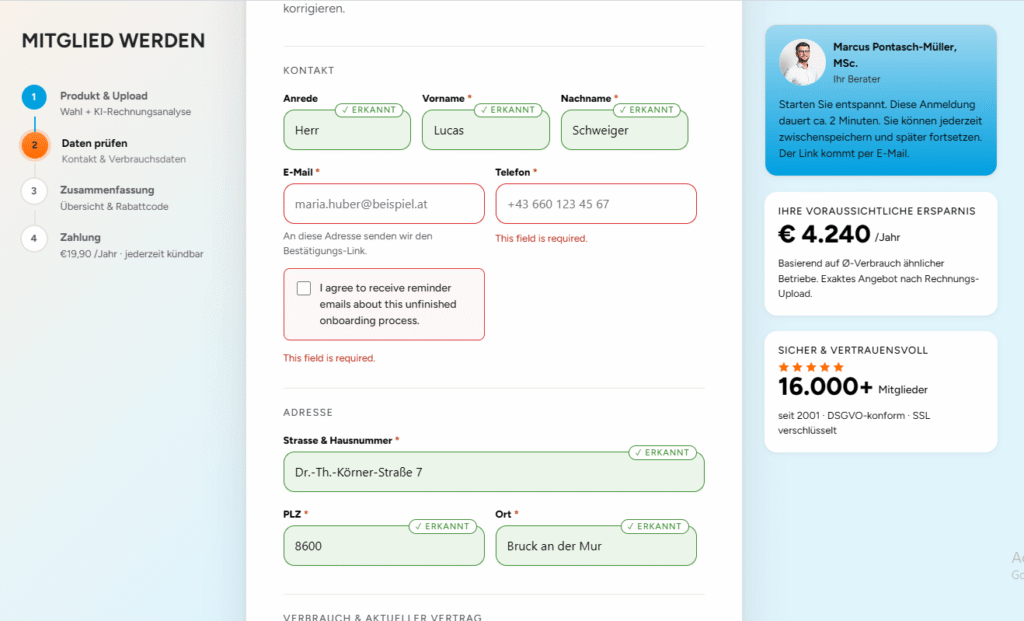
Users can upload an identity document, image, or PDF. The plugin sends the file through an AI extraction workflow and uses the resulting structured data to auto-populate form fields.

Engineering depth: This turns document uploads into actionable form state instead of storing them passively.

07

Dynamic schema-aware AI extraction

The extraction request is aware of the available form fields, so the AI is guided by the actual onboarding schema rather than a one-size-fits-all document template.

Engineering depth: This allows the same extraction engine to work across different forms and use cases.

08

Complex AI field-value reconciliation

Extracted values are reconciled back into multiple field types, including text inputs, radios, and advanced checkbox groups. The system does not just dump raw text — it maps it into usable UI state.

Engineering depth: Value matching across field types is what makes autofill practically useful.

09

Temporary document lifecycle handling

The upload flow validates file types and size limits, manages temporary local files and remote AI file uploads, and performs cleanup after processing is complete.

Engineering depth: File-processing systems need lifecycle hygiene, not just API calls.

Implementation screenshots

System 03

Membership Pricing, Stripe & Billing

The payment layer is not a superficial Stripe embed. The plugin contains a server-trusted membership pricing system, controlled checkout preparation, and event-driven payment verification.

Engineering context

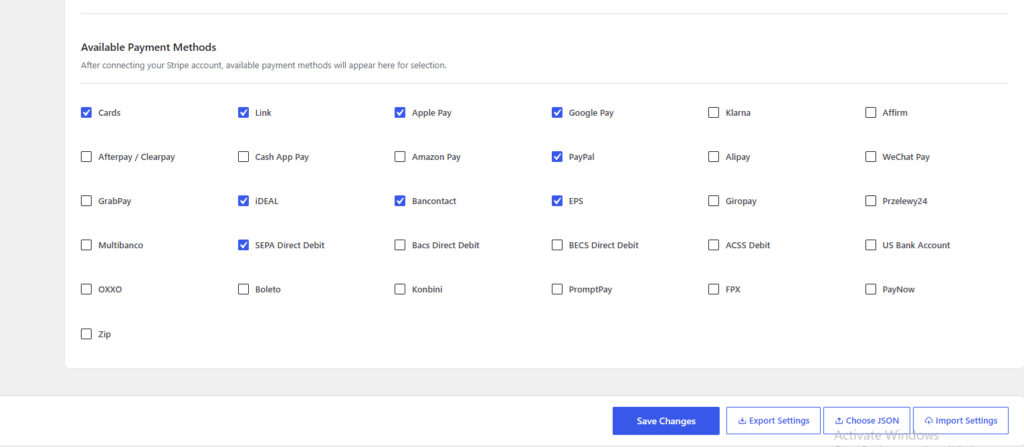
Any onboarding flow that depends on payments becomes fragile when the browser is trusted too much. This implementation puts pricing authority on the server and reconciles Stripe events against local state.

10

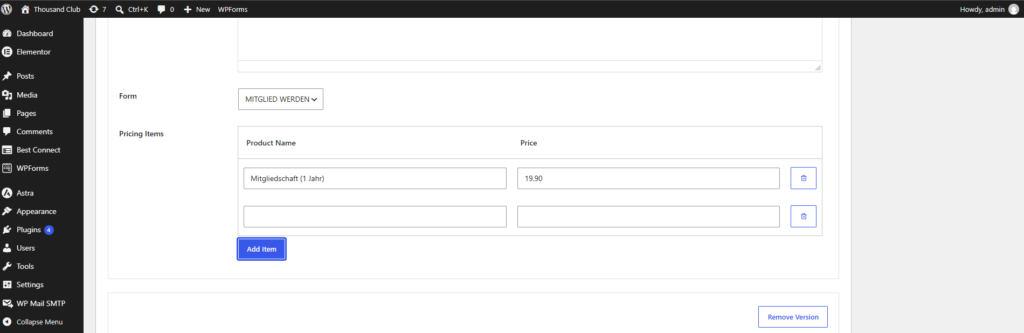
Multi-version membership pricing engine

Each membership can contain multiple versions, with separate products, descriptions, prices, and linked onboarding forms.

Engineering depth: This supports productized service variation without duplicating the entire application logic.

11

Cryptographically signed membership selection

The plugin binds the selected membership, version, and form together using HMAC signatures so offer context cannot be tampered with in the browser.

Engineering depth: It protects the integrity of what the user is actually buying.

12

Server-authoritative checkout calculations

Final totals, subtotals, discounts, and currency values are recalculated from trusted server-side data rather than accepted from browser input.

Engineering depth: This is a core anti-manipulation measure.

13

Persisted payment-context snapshots

The plugin stores the membership and price context with the lead record so later steps cannot silently drift away from the original checkout basis.

Engineering depth: It creates a traceable relationship between selection, payment, and onboarding.

14

Dual-mode Stripe payment engine

The plugin supports both one-time payments and recurring subscriptions through separate preparation and processing paths.

Engineering depth: Recurring billing logic differs materially from one-off checkout handling.

15

Dynamic Stripe product and recurring-price provisioning

Products and prices can be matched or created dynamically in Stripe based on hashed metadata, amount, currency, and interval settings.

Engineering depth: This avoids brittle manual Stripe catalog maintenance.

16

Idempotent Stripe subscription creation

The code uses idempotency keys and duplicate-check strategies to reduce the risk of creating the same subscription twice when requests are retried.

Engineering depth: Payment workflows need explicit retry safety.

17

Webhook-based payment verification

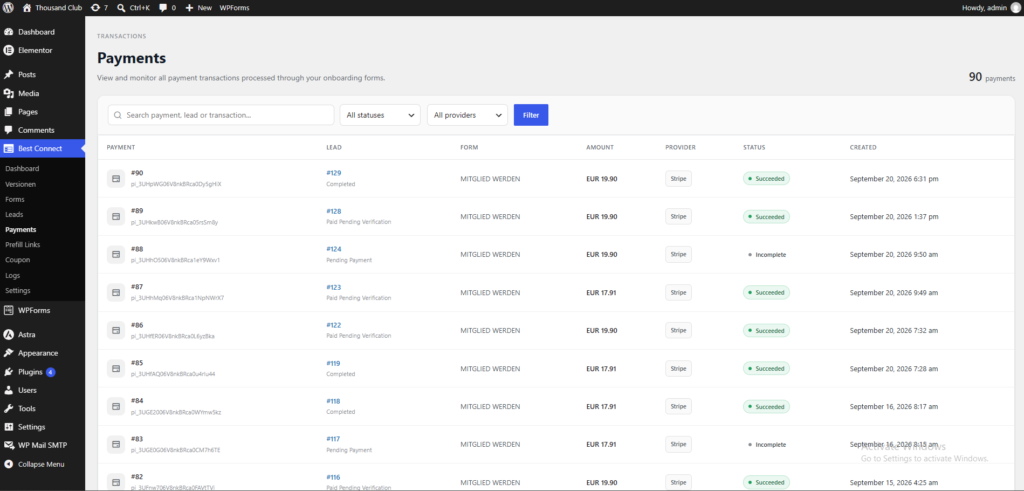
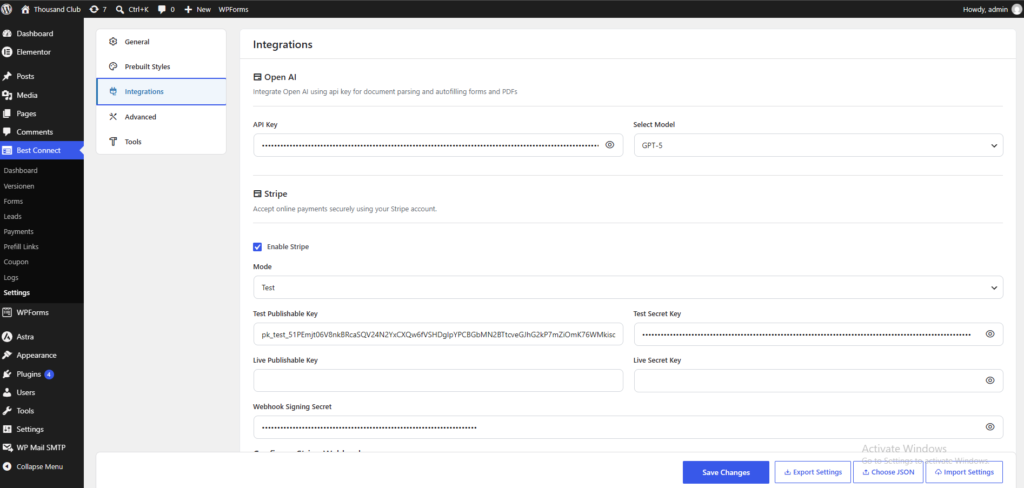
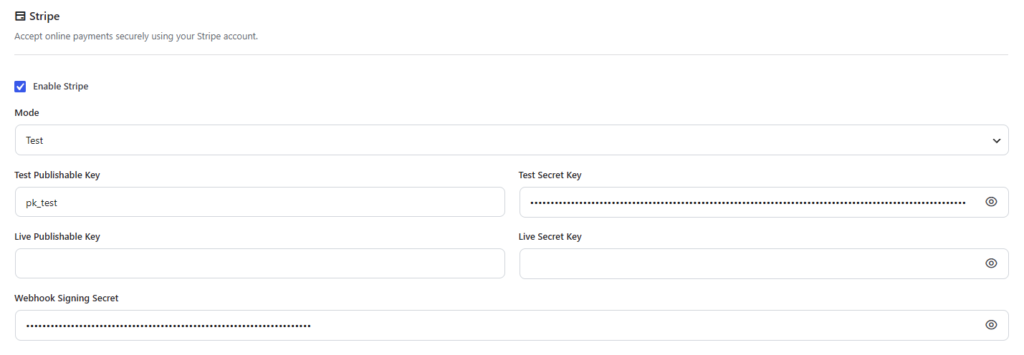
Stripe webhook events are signature-validated and used to process payment intents, invoices, subscription updates, failures, and cancellations.

Engineering depth: Browser redirects are not treated as the source of truth.

18

Amount-and-currency reconciliation

The system compares the paid Stripe amount and currency against the locally expected payment data before marking the payment successful.

Engineering depth: This prevents “paid” states from being accepted blindly.

19

Asynchronous payment recovery and synchronization

Return flows and later payment synchronization are handled separately so the application can recover from incomplete or delayed browser completion events.

Engineering depth: Real-world payment flows are often asynchronous and imperfect.

20

Recurring invoice history and onboarding-state protection

Later subscription invoices are tracked without incorrectly resetting the customer’s onboarding progress or completed application state.

Engineering depth: Subscription billing should not destabilize onboarding records.

21

Advanced coupon validation and fraud controls

The coupon engine supports percentage and fixed discounts, date windows, usage limits, minimum amounts, form restrictions, max discounts, lead-level tracking, and failed-attempt rate limiting.

Engineering depth: This is a full validation layer, not a simple discount field.
System 04

Advanced PDF Contract Automation

This section contains some of the heaviest engineering in the plugin: condition-driven contract generation, PDF field introspection, mapping, compatibility handling, user review, protected storage, and final verification.

Engineering context

PDF automation sounds simple until field types, export values, legacy widget behavior, and review/edit permissions start colliding. This plugin handles those edge cases explicitly.

22

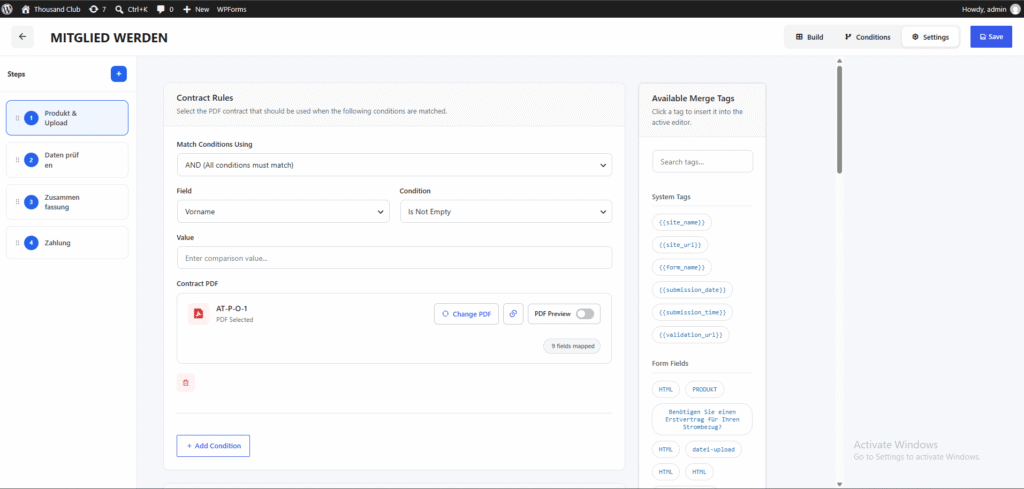
Rule-based contract generation engine

Different contract templates are selected based on submitted answers using AND/OR condition groups and comparison rules.

Engineering depth: Contract generation is tied to application data, not chosen manually.

23

Deep PDF AcroForm field inspection

The plugin traverses PDF field structures to identify text fields, dropdowns, radio groups, checkboxes, widget details, and export values.

Engineering depth: Understanding field internals is essential for reliable automation.

24

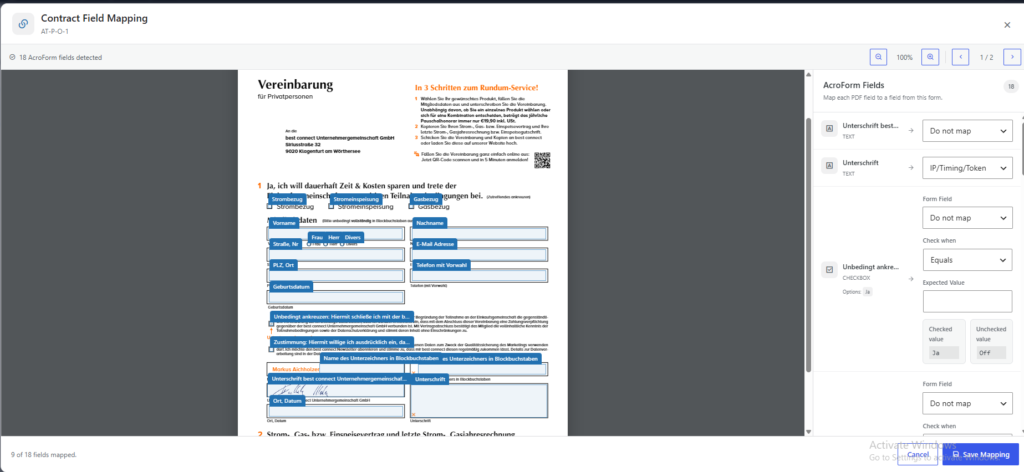
Visual PDF-to-form mapping interface

Administrators can visually connect onboarding fields to PDF form fields, including value mappings and checkbox conditions.

Engineering depth: This turns PDF automation into a maintainable admin workflow.

25

Deterministic PDF field-mapping execution

Saved mappings are transformed into exact PDF values, with handling for radio export values, conditional checkboxes, and special generated values.

Engineering depth: The production contract flow uses deterministic mapping rather than vague text replacement.

26

Hybrid modern/legacy PDF processing engine

The plugin detects modern cross-reference stream PDFs and routes them through different fill strategies depending on compatibility needs.

Engineering depth: This is a practical solution to real PDF ecosystem inconsistency.

27

PDF normalization and compatibility pipeline

Some modern documents are normalized before checkbox and radio widget filling is attempted through legacy handling paths.

Engineering depth: Compatibility was engineered, not assumed.

28

Browser-based interactive contract review

Generated PDFs are rendered using PDF.js and interactive form controls are recreated over the pages so users can review and correct contract details in the browser.

Engineering depth: This bridges server-generated documents and front-end interactivity cleanly.

29

Server-restricted PDF correction system

Only approved fields from configured mappings can be edited during correction, while protected fields such as the signing field are excluded from arbitrary edits.

Engineering depth: Editability is controlled instead of exposing the entire PDF blindly.

30

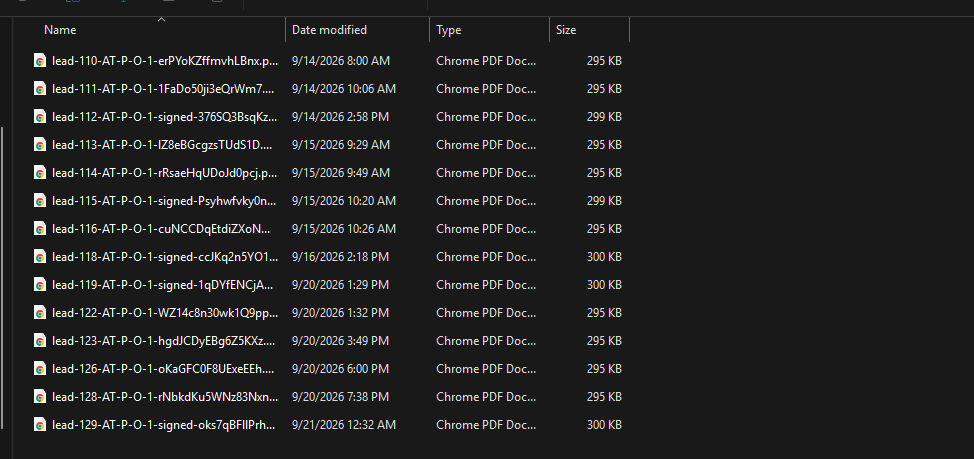
Protected contract storage and signed file delivery

Contracts are stored privately and delivered through expiring HMAC-signed URLs with lead ownership and authorization checks.

Engineering depth: Sensitive documents are not left as publicly exposed media links.

31

Email-verification-driven contract finalization

A single-use verification token with expiry triggers final contract processing and injects a timestamped, IP-aware verification stamp into the mapped PDF field.

Engineering depth: The workflow ties identity verification to the final contract state.

32

Transaction-safe membership number allocation

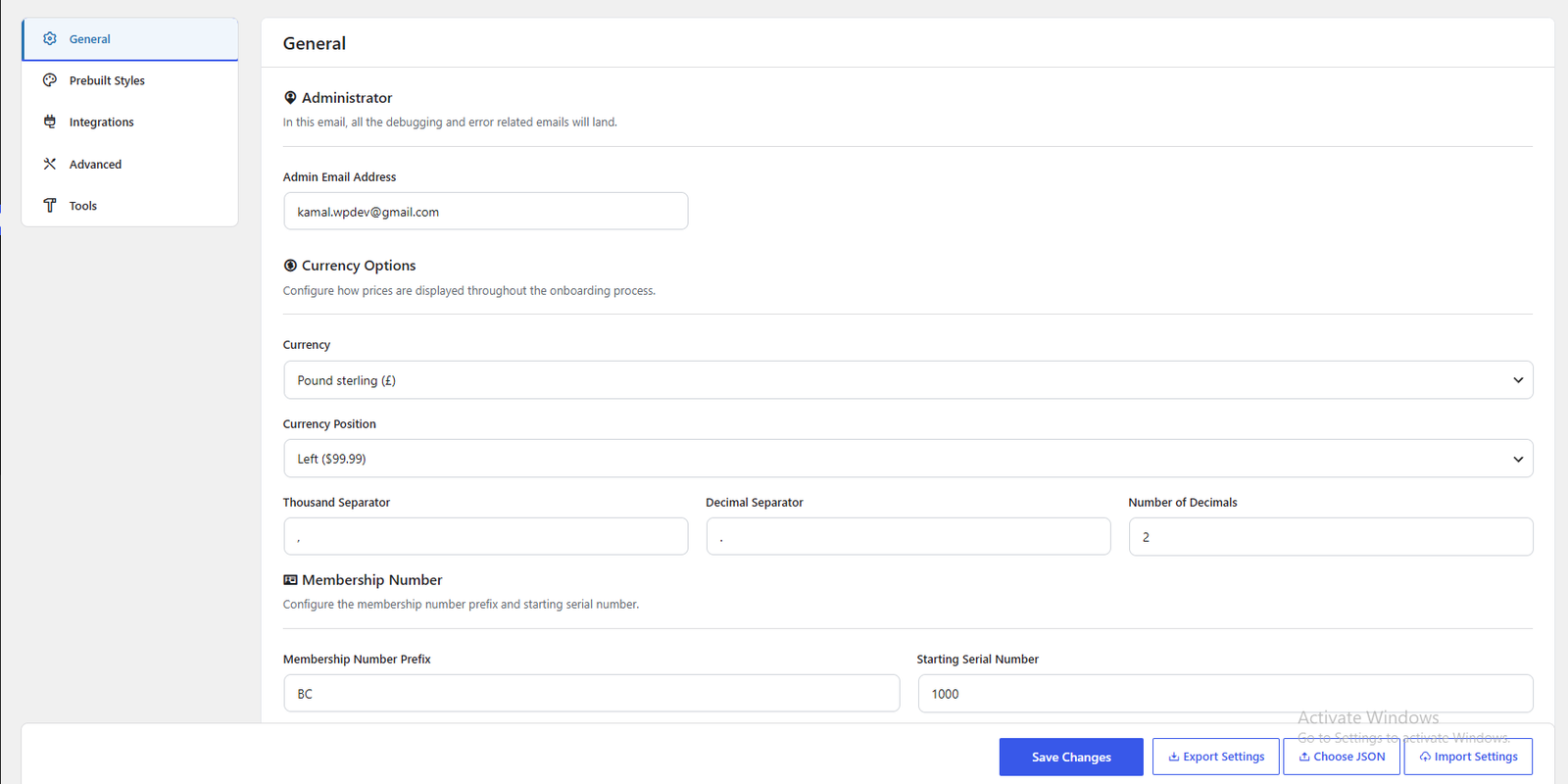
Year-based sequential membership numbers are generated using SQL transactions and row-level locking to avoid concurrency conflicts.

Engineering depth: Unique business identifiers are allocated safely under concurrent usage.

Implementation screenshots

System 05

Business Integrations & Recovery Automation

After onboarding and contract completion, the plugin continues to operate as an internal business workflow system, connecting financial delivery, recovery reminders, and tokenized prefill flows.

Engineering context

This is where many plugins stop. Here, the system continues beyond form submission and handles external delivery, retries, and user re-entry into unfinished flows.

33

DATEV-compatible invoice payload transformation

The plugin transforms onboarding and payment data into structured customer and invoice payloads for DATEV-oriented downstream processing.

Engineering depth: Form data is translated into finance-compatible output, not just stored as submissions.

34

Fault-tolerant DATEV middleware delivery

Invoice payloads are sent through a validated HTTPS endpoint, with persisted delivery state, diagnostic logging, retry scheduling, and administrator notification after repeated failure.

Engineering depth: External integration is treated as unreliable and therefore engineered for resilience.

35

Consent-based abandoned-onboarding recovery

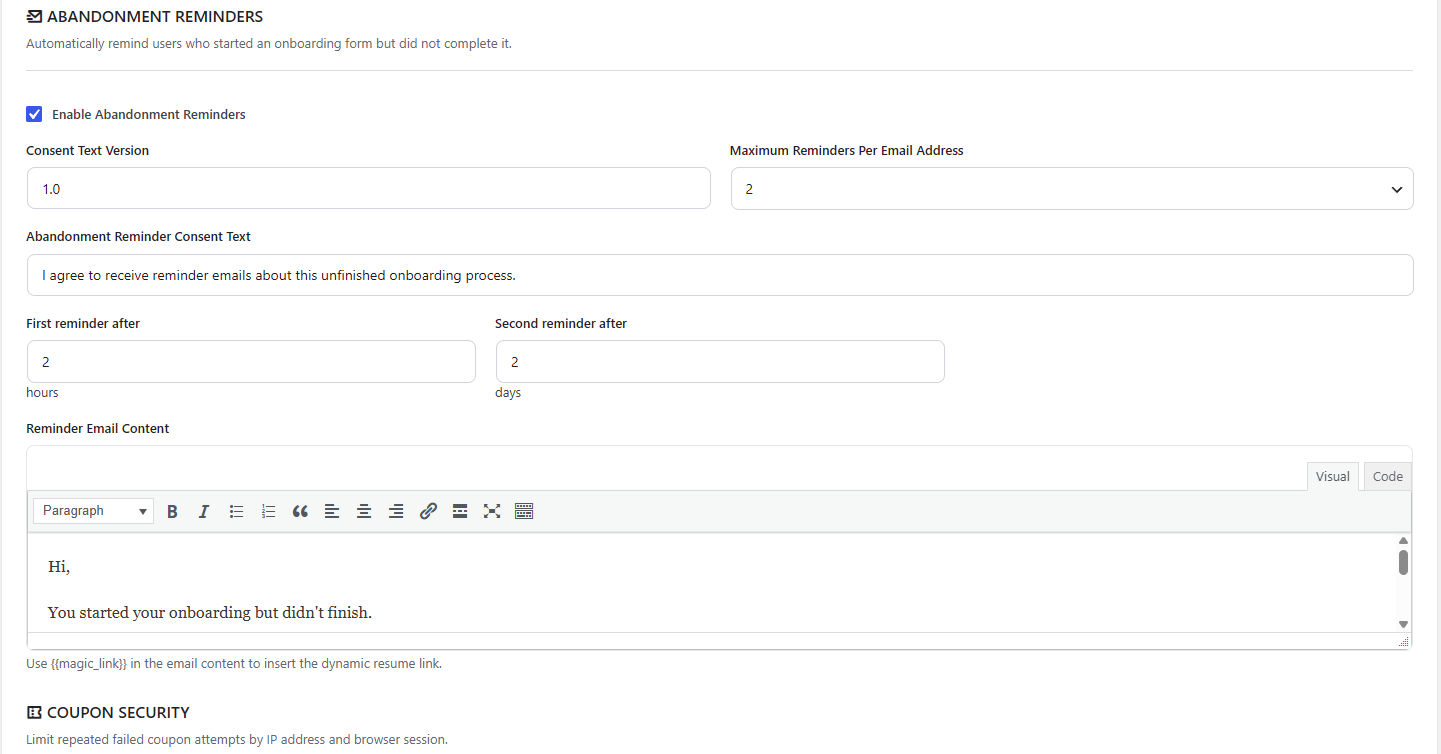
Unfinished applications can be captured along with current step, consent version, timestamp, and a resume token, then followed up with configurable reminders and unsubscribe logic.

Engineering depth: Recovery is consent-aware and stateful, not just “email everyone who dropped off”.

36

Single-use, expiring prefilled onboarding links

Administrators can generate prefilled application links with expiry windows. Tokens are claimed atomically and only approved fields are restored when the form opens.

Engineering depth: This is secure prefill delivery, not open query-string stuffing.

Implementation screenshots

System 06

Privacy, Observability & Infrastructure

The last group of features shows that the plugin was engineered for long-term operation, not just launch-day functionality. Data retention, export/erasure, structured logging, and versioned schema updates were built into the system.

Engineering context

Reliability is not just about the happy path. It also includes how a system logs, migrates, expires data, and cooperates with privacy requirements.

37

GDPR-aware data lifecycle engine

The plugin integrates with WordPress personal-data export and erasure tools, supports configurable retention cleanup, and avoids removing records until required external delivery steps are finished.

Engineering depth: Privacy handling is embedded into the application lifecycle, not bolted on later.

38

Operational observability and versioned infrastructure

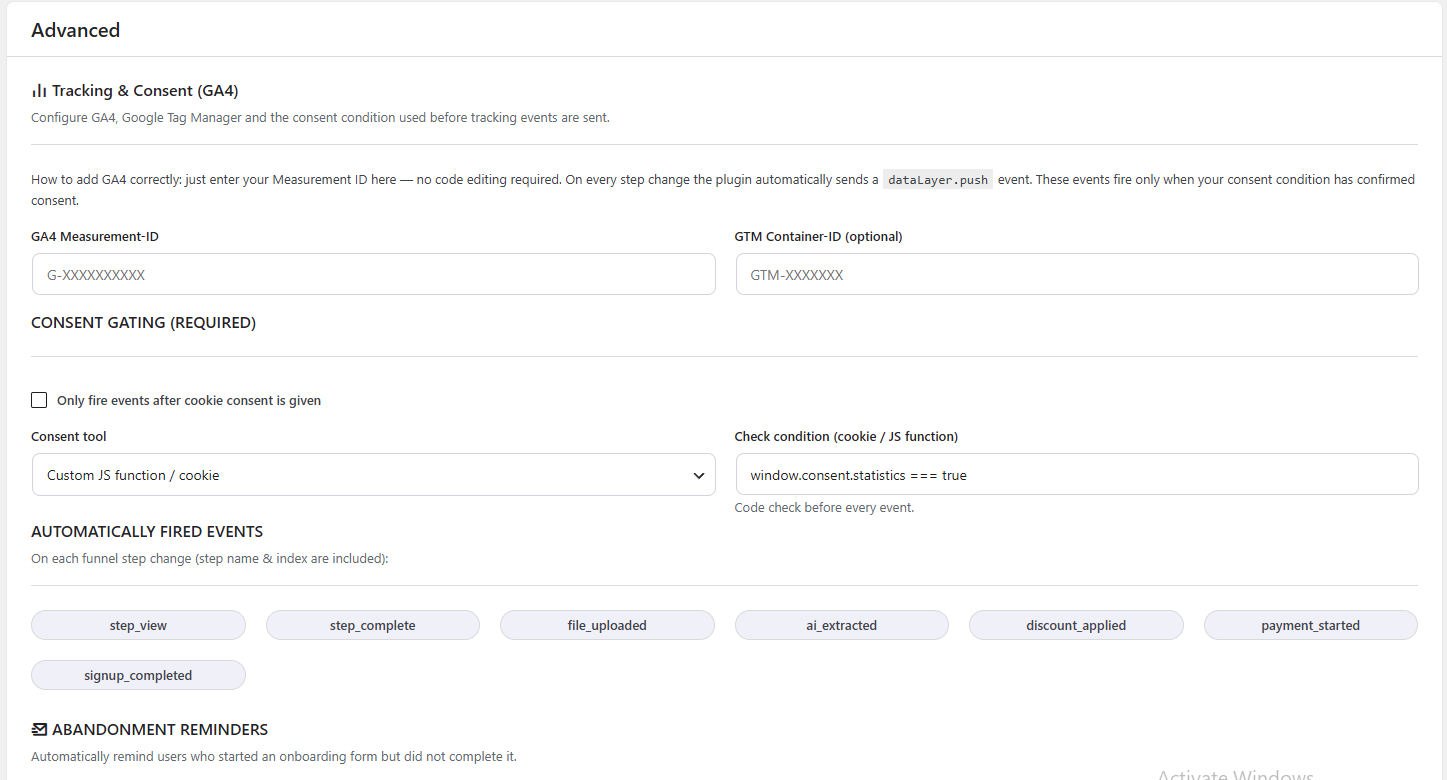
The plugin includes structured logging with operation context and incremental database migrations protected by upgrade locks. It also contains consent-gated analytics tracking with form and transaction context.

Engineering depth: This supports maintainability, debugging, and safe evolution over time.

Implementation screenshots

HAVE A PROJECT IN MIND?

Let's turn “can we do this?”
into “here's the plan.”

Start with a quick, no-obligation project conversation. Tell us what you're trying to solve.

Start the conversation ↗